


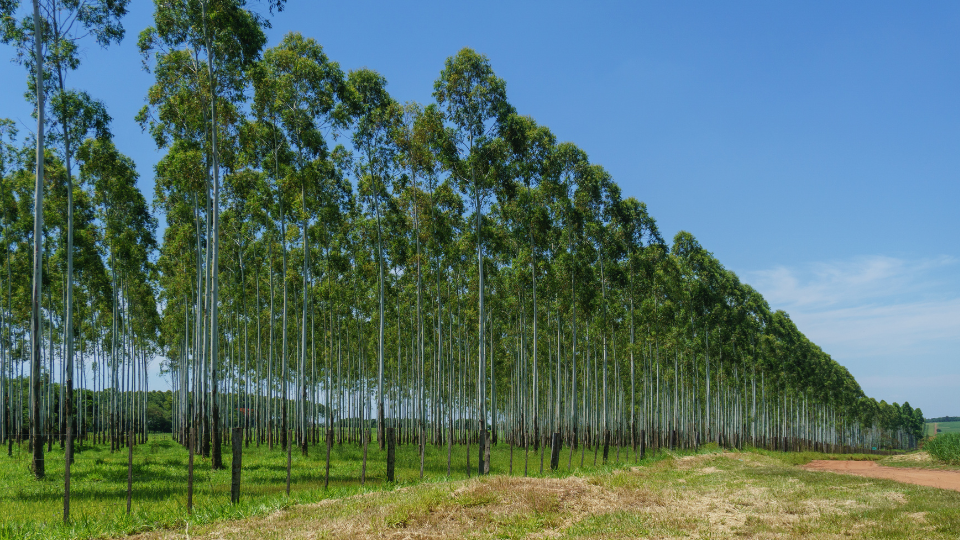
In recent years, Mato Grosso do Sul has established itself as one of the main hubs of the pulp industry in Brazil. The growth of this sector has had a significant impact on the state’s infrastructure, driving investment in roads, railways, energy, and logistics, which directly affects economic activity and development throughout the northern region of Mato Grosso do Sul.
It is important to remember that several multinational companies have invested in Mato Grosso do Sul, attracted by the availability of land for eucalyptus plantations, favorable climatic conditions, and tax incentives.
Large Pulp companies have expanded their operations in the region, increasing production, stimulating the local economy, and generating jobs and revenue for the State and municipalities where they are located. Industrial expansion also drove investment in sanitation, housing, and services, improving the quality of life for the local population.
Like any other industry, logistics is one of the main challenges to be faced, including in the pulp segment, due to the high volume of raw materials transported. In addition, improvements are needed in port infrastructure and the integration of transport modes, bearing in mind that the expansion of the sector must be accompanied by strict environmental measures to ensure the preservation of the State’s natural resources.
To improve production flow, investments have already been made in paving and expanding highways surrounding the so-called Pulp Route. In January 2025, the state government published a notice for the concession of state highways MS-040, MS-338, and MS-395, as well as federal highways BR-262 and BR-267, which will facilitate transportation between factories and ports.
According to information provided by the government of Mato Grosso do Sul, investments are expected to reach R$10 billion. The planned works include widening, hard shoulders, third lanes, service roads, and the implementation of municipal bypasses, among others.
In addition to improvements in highways, rail transport has been identified as a strategic solution for reducing logistics costs and environmental impacts. Projects such as Rumo Malha Oeste and studies for the expansion of the North-South Railway may strengthen the flow of pulp to the domestic and international markets.
As for energy, it is noted that it also grew substantially with the implementation of new factories. To improve demand response, investments were made in renewable energy generation, including biomass, which contributes to the sector’s sustainability.
The future of the pulp industry in Mato Grosso do Sul promises continued investment and infrastructure development, consolidating the State as a global benchmark in the sector, as well as improving socioeconomic conditions across the entire region.
Available in: https://www.agroplanning.com.br/2025/08/13/o-impacto-da-industria-de-celulose-no-estado-de-mato-grosso-do-sul/
Autor: Edyen Valente Calepis • email: edyen@ernestoborges.com.br


