


Although it is one of the most well-known taxes, few people are aware of the important extrafiscal functions that the IPTU performs. Despite its primarily revenue-raising role, the Urban Property and Land Tax is an important tool for directly influencing the economy and taxpayer behavior.
In this context, the concept of “Green IPTU” or “Ecological IPTU” emerges. As its name suggests, Green IPTU is a municipal tax initiative aimed at promoting sustainable practices in urban properties, offering financial incentives to owners who adopt measures that contribute to environmental preservation and sustainability.
This public incentive not only aligns the country with the current global scenario (such as Brazil’s climate commitments under the Paris Agreement, recently updated at COP26) but also seeks to implement constitutional principles. Here, attention is drawn to Article 225 of the Brazilian Federal Constitution:
“Everyone has the right to an ecologically balanced environment, a common good of the people and essential to a healthy quality of life, imposing on the Government and the community the duty to defend and preserve it for present and future generations.”
Beyond its formal aspect, Green IPTU, in practice, seeks to mitigate negative impacts affecting urban environments. The uncontrolled urbanization experienced by Brazil in the last century and the lack of adequate planning—especially in large cities—have generated serious consequences today, such as heat islands, soil impermeability, pollution, and biodiversity loss.
But what are the benefits of Ecological IPTU for taxpayers?
In addition to contributing to a healthier environment, property owners who adopt the necessary practices for the tax incentive can obtain significant discounts on IPTU, representing considerable financial savings.
In São Paulo, for example, the discount on the tax may vary (according to the degree of certification of the property) commonly between 4%, 8%, and 12%. In more specific cases (such as properties covered with tree vegetation declared as permanent or perpetual preservation), the discount can reach up to 50%.
The criteria for qualifying for Green IPTU vary among municipalities but generally include initiatives related to:
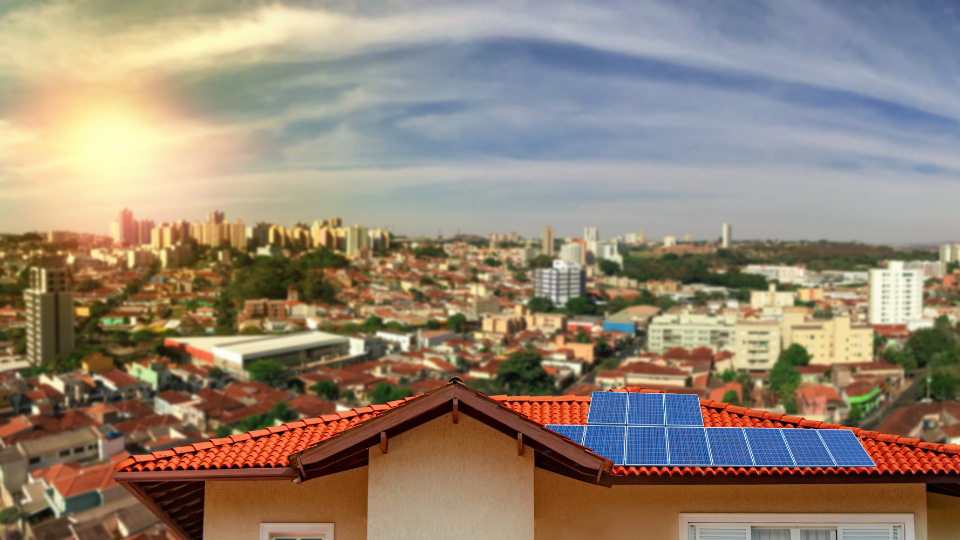
I. Energy Efficiency: Installation of solar panels for clean electricity generation and water heating.
II. Water Resources: Implementation of rainwater harvesting and reuse systems (cisterns), as well as expanding permeable areas for rain absorption (lawns in yards or even vertical gardens in buildings).
III. Ecological Construction: Use of sustainable building materials to reduce the environmental impact of construction and promote eco-efficient buildings, including bioclimatic architecture.
IV. Waste Management: Composting practices and selective waste collection.
V. Tree Planting: Planting trees proportional to the property’s size.
The first step toward obtaining Ecological IPTU is to check whether your municipality adopts the tax incentive. Next, gather the required documentation to apply for the program, as provided in the applicable legal framework. From then on, the responsible agency will analyze the submitted documents.
Despite its benefits, implementing Green IPTU faces numerous challenges, such as the need for greater initial investment to adopt sustainable practices (despite the later return) and cultural resistance to changing traditional construction methods. Furthermore, many municipalities grant the tax incentive only for new constructions, discouraging the adoption of sustainable practices in existing buildings.
However, since the enactment of Constitutional Amendment Proposal No. 13/2019 by the Federal Senate—which amended Article 156 of the 1988 Constitution to establish environmental criteria for charging the Urban Property and Land Tax and exempt portions of property with native vegetation—the Ecological IPTU has gained more traction, being adopted by several municipalities across all regions of the country. It is clear, therefore, that with public support and population awareness, the tax incentive has real potential to expand and bring significant benefits to Brazilian cities.
Available in: https://www.estadao.com.br/economia/iptu-verde-iniciativa-para-um-futuro-sustentavel/
Autor: Flávia Sant'Anna Benites • email: flavia@ernestoborges.com.br • Tel.: +55 67 99984 1406


