


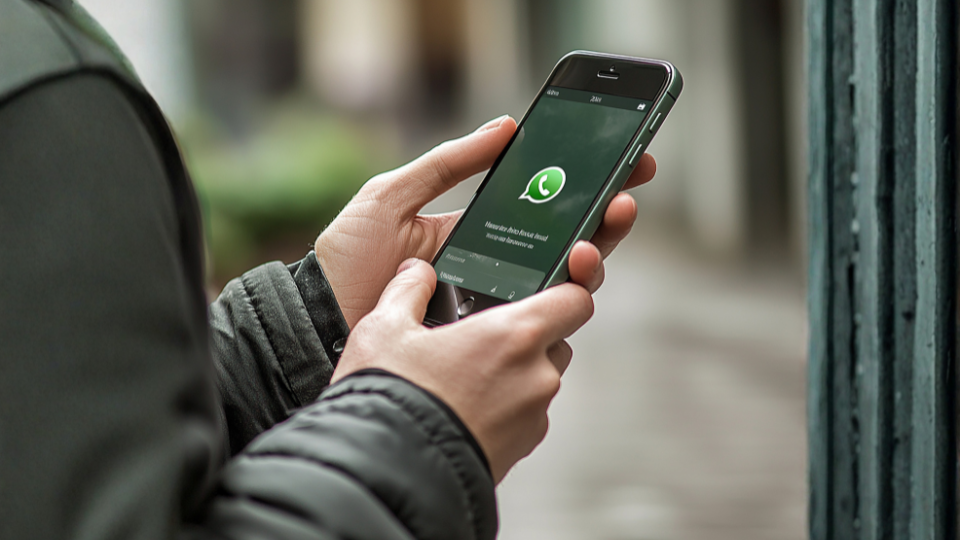
The Superior Court of Justice (STJ) has taken a decisive step toward modernizing procedural communication in Brazil by submitting, for judgment under the repetitive appeals procedure, the controversy over the validity of service of process in civil actions via messaging apps or social networks. The decision, issued by the Special Court (Corte Especial), establishes Repetitive Theme No. 1345, signaling the urgency and relevance of the debate in an increasingly connected country.
The central legal question to be defined by the STJ is clear: “to determine whether service of process in civil actions via messaging apps or social networks is valid.” The matter was taken up in Special Appeal (REsp) No. 2,160,946/SP, with Justice Sebastião Reis Júnior as the reporting justice.
The debate over electronic service of process takes on a necessary prominence in a context where Brazil records a significant number of mobile devices, as sector analyses indicate. The possibility of using tools such as WhatsApp or social networks to carry out procedural acts promises unprecedented speed, aligned with the principles of the instrumental nature of forms and the reasonable duration of proceedings.
Denial of Service Attempt
In the specific case that led to the submission—REsp 2,160,946/SP—the dispute arose from the lower courts’ denial of a request to attempt service via WhatsApp.
The São Paulo Court of Justice (TJ‑SP) had upheld the decision, requiring that the addressee’s electronic address be registered in the Court’s database, pursuant to Article 246 of the Code of Civil Procedure (CPC), and arguing that the importance of service of process demands more “orthodox” means to ensure that the message reaches the actual recipient.
The appellant, in turn, argued for electronic service as the rule, in favor of speed and effectiveness.
By taking up the issue, the Special Court acknowledged the multiplicity of cases and the divergence of understandings among Brazilian courts. Although there are precedents in the STJ Panels validating service via app where the purpose of the act is achieved (the principle of the instrumental nature of forms, set out in Article 277 of the CPC), the submission seeks to consolidate a binding thesis, providing legal certainty to society at large.
Submission Decision
A crucial point of the submission decision is the timeframe established for judgment. Under the repetitive appeals procedure, the STJ is committed to adjudicating the theme within up to one year.
Considering that the submission decision was issued in May 2025, the expectation is that the definitive thesis on the validity of service of process via messaging apps and social networks will be set by May 2026.
It is important to note that, despite the submission, the Special Court unanimously decided not to suspend ongoing cases on the matter nationwide. The decision not to suspend was motivated by the existence of an already consolidated jurisprudential orientation in the Private Law Panels and by the need not to compromise procedural speed.
A Leap in Judicial Efficiency
The thesis to be established by the STJ in 2026 will have a significant impact on day‑to‑day legal practice. Validating service of process by digital means—provided necessary safeguards are observed to unequivocally verify the identity of the person being served and receipt of the information—may represent a leap in efficiency for the Judiciary.
The final judgment promises to harmonize technological innovation with the constitutional guarantees of adversarial proceedings and ample defense, defining the limits and security conditions for service of process—an act of the highest procedural importance—to be effectively and modernly carried out in the digital environment.
Autor: Daniel Feitosa Naruto • email: daniel.naruto@ernestoborges.com.br • Tel.: +55 67 3389 0123


