


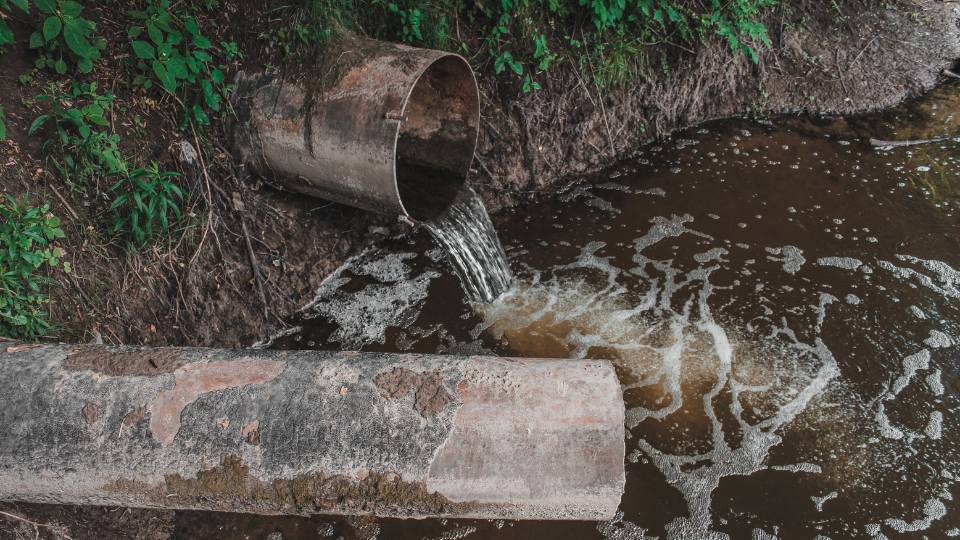
Problems involving sewage leaks are more common than many people realize in regions such as Arniqueira, in the Federal District. In addition to unpleasant odors and health risks, a recurring question arises: after all, who is responsible for the problem—the property owner or the government?
The answer is not as straightforward as it may seem, but Brazilian law provides clear criteria for determining liability.
In the Federal District, water supply and sewage services are provided by the Environmental Sanitation Company of the Federal District (CAESB), which operates as a public utility concessionaire. This means that it has a legal duty to ensure the proper functioning of the public sewage network. When there is a failure in the provision of this service, liability is strict (objective) liability, meaning that it is not necessary to prove fault, but only the occurrence of damage and its connection to the service.
In such cases, CAESB will be responsible whenever the sewage leak occurs in the public sewer system, on public roads, and after the sewage line exits the private property.
Conversely, the property owner or occupant is responsible when the problem occurs within the boundaries of the property, in the internal plumbing system, and prior to its connection with the public network.
However, it is not always easy to identify precisely where the failure occurred. In many situations—particularly in areas such as Arniqueira—more complex issues arise, often related to improperly executed connections, improvised networks, and the absence of technical standardization.
In such cases, determining liability generally depends on a technical expert assessment. The urban development characteristics of Arniqueira directly influence the occurrence of these problems.
Regardless of the location within Brazil, it is essential to identify the exact point of the sewage leak, as only then can responsibility for correcting the issue be properly established. In the case of Arniqueira, it is imperative to notify CAESB, as the company can provide guidance regarding the procedures to be adopted by those seeking to resolve the problem or those who consider themselves adversely affected.
Finally, regarding the Urban Property and Land Tax (IPTU), it is worth clarifying that this tax falls under the jurisdiction of municipalities—and, in the case of the Federal District, the Government of the Federal District (GDF). It is provided for in Article 156, Item I, of the Federal Constitution and regulated by Articles 32 through 42 of the National Tax Code (CTN). Its taxable event is the ownership, beneficial ownership, or possession of real estate located within an urban area.
Article 32, §1 of the CTN establishes that an urban area is one defined by municipal law and that contains at least two of the following public improvements constructed or maintained by the government:
- Curbs or paved streets with stormwater drainage systems;
- Water supply services;
- Sanitary sewage systems;
- Public street lighting;
- A primary school or health center located within a maximum distance of three kilometers from the property.
The existence of a sanitary sewage system is one of the legal criteria for an area to be classified as urban and, consequently, subject to the IPTU.
When sewage treatment services are not adequately provided, this may create an important legal avenue for taxpayers. In such circumstances, property owners may demand that the government address and remedy the deficiencies affecting the area where the tax is being levied, except, as noted above, when the issues originate within private properties.
Available at: https://www.correiobraziliense.com.br/cidades-df/2026/07/7453992-moradores-de-arniqueira-sofrem-com-esgoto-a-ceu-aberto.html
Autor: Edyen Valente Calepis • email: edyen@ernestoborges.com.br


